
Air Conditioning for Your Bedroom: What to Know Before You Fit It
Last summer, plenty of us lay awake in a bedroom that stayed hot long after the sun went down. If that was you, a bedroom is the best place to start. It is the room where you notice the heat most, and a single-room system is the simplest installation there is.
This guide covers the questions we get asked most: fixed or portable, what size, where it goes, whether it will keep you awake, what it costs to run, and what happens on the day it is fitted.
Why the bedroom is the best first room
Bedrooms are usually at the top of the house, under the warmest part of the roof, and you spend eight hours a day in them with the door shut. A small system for one room also costs far less than cooling the whole house. Most people who start with a bedroom are glad they did.
There is a sleep reason too. The Sleep Charity recommends a bedroom temperature of 16 to 18 degrees for good sleep. On a summer night, an upstairs bedroom in a 1930s semi can still be sitting at 26 degrees or more well past midnight. That gap is why bedroom air conditioning makes such a noticeable difference, and why it is the room people wish they had sorted first.
Bedrooms in Abingdon and Oxford homes
Most of the bedrooms we are asked about are at the top of 1930s semis and 1960s estate houses around Abingdon, Didcot and Wantage, where the main bedroom sits under a south-facing roof and holds the heat long after sunset. Loft conversions are the other common one: lovely rooms, but they are the hottest in the house in July and the coldest in January, which is exactly where a system that heats and cools earns its keep.
In Oxford, Victorian terraces in Jericho, Iffley and East Oxford need a bit more thought about where the outdoor unit goes, and properties in conservation areas can have rules about units visible from the street. We check all of that at the free home survey, so you know where you stand before you commit to anything.
Fixed system or portable unit?
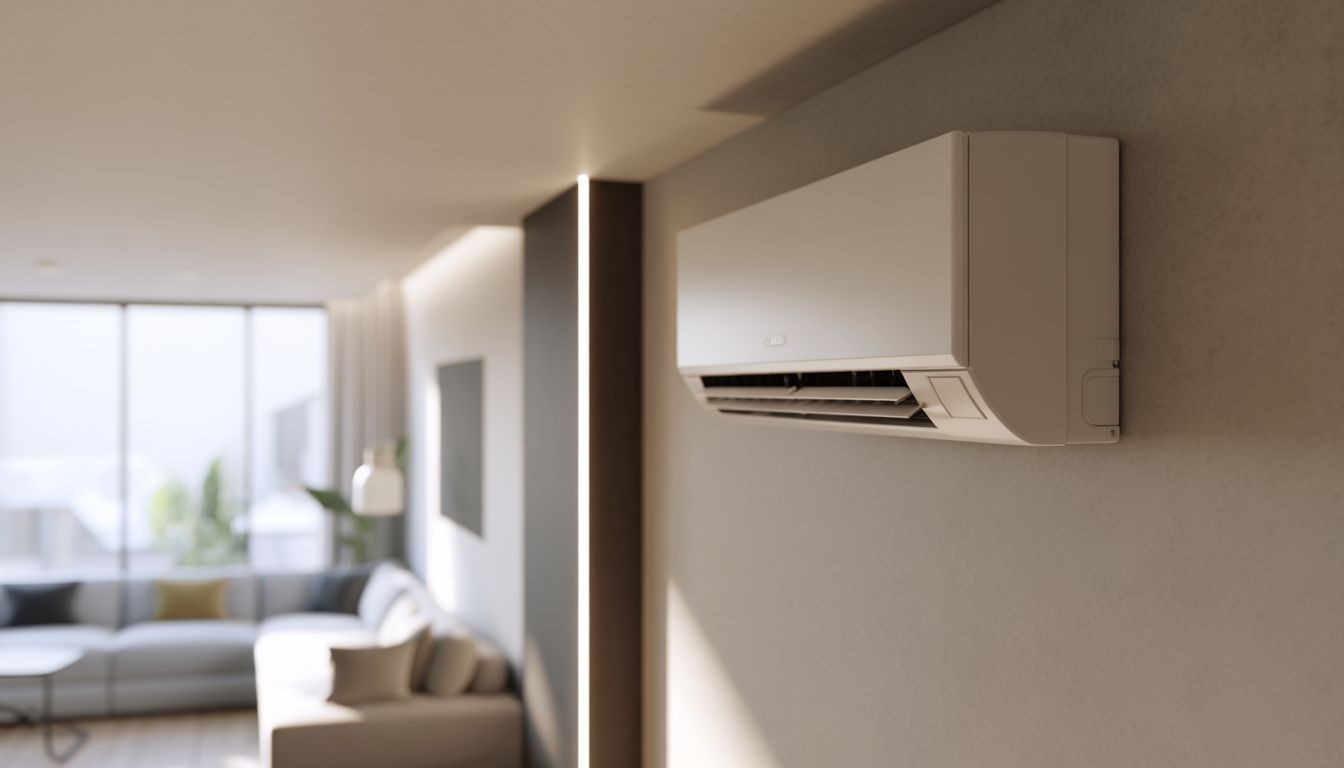
Portable units look cheaper, but they vent hot air through a hose out of a window, which lets warm air back in. They are usually louder and less efficient too, and they take up floor space in a room that rarely has any to spare. A fixed wall-mounted system has an indoor unit on the wall and a small outdoor unit outside, connected by a neat pipe run. It is quieter, cools faster, costs less to run, and it heats in winter, which a portable cooler cannot do.
How big does the unit need to be?
As a rough guide, a small bedroom of up to about 12 square metres usually suits a 2.5kW unit. A larger double or a loft room of 12 to 20 square metres is usually 3.5kW. Only a big master suite, or a room with a lot of glass or a flat roof above it, needs more than that.
Bigger is not better. A unit that is too powerful cools the room in a rush and switches itself off before it has dealt with the humidity, which is what leaves a room feeling clammy rather than fresh. A correctly sized unit runs gently for longer and does both jobs. The right size depends on the room, the roof above it, the windows and which way they face, so we confirm it at the free home survey rather than guess.
Where the unit goes
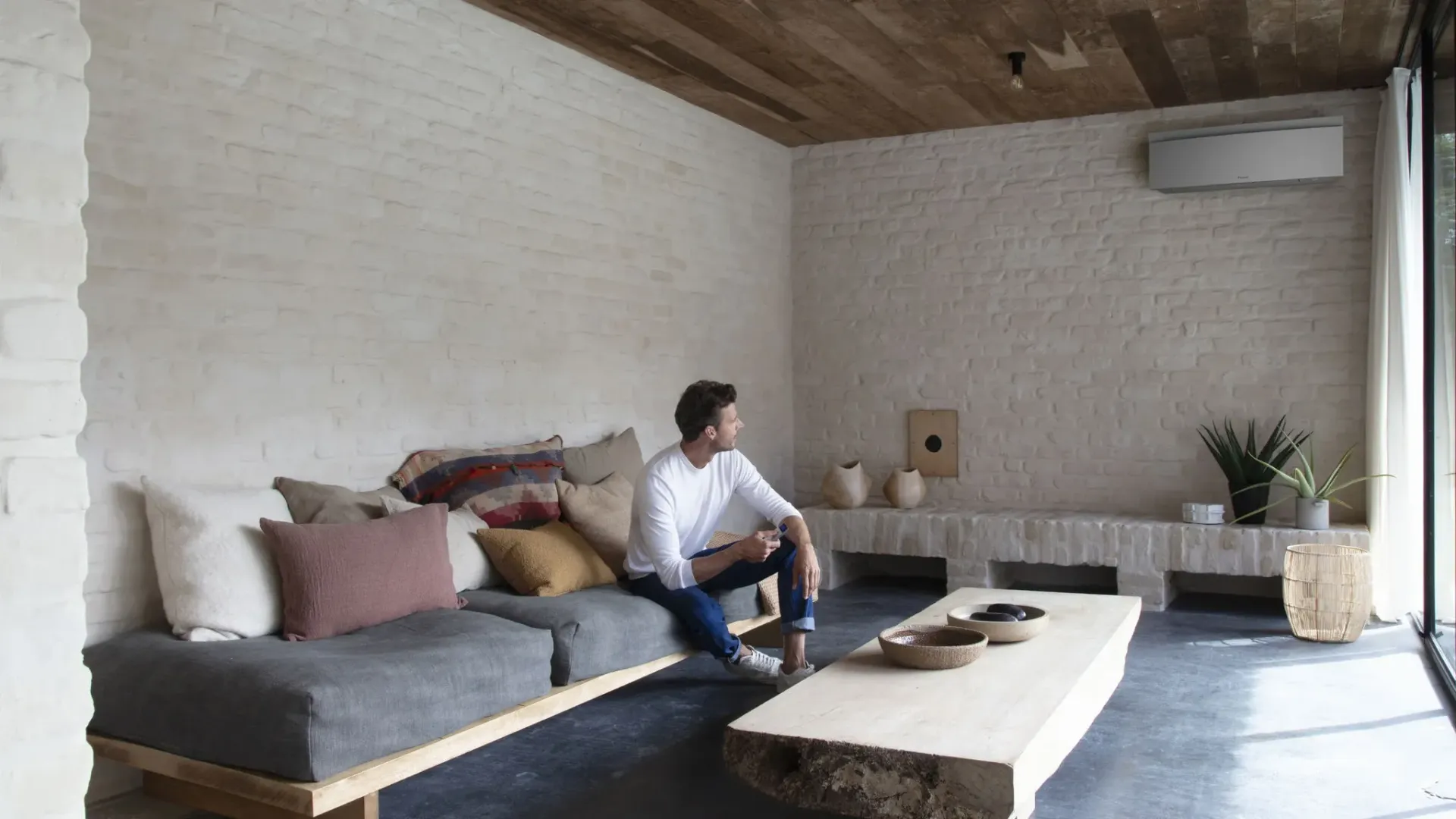
The indoor unit sits high on the wall, ideally above the door or on the wall opposite the bed, so the air sweeps across the room rather than straight onto the pillow. We avoid the wall directly above the headboard. The pipes run through a single hole in the wall and are boxed in with trunking matched to the wall colour, and the condensation drain runs outside.
The outdoor unit goes on a wall bracket or a ground base, within a few metres of the indoor unit to keep the pipe run short and tidy, and away from a neighbour's bedroom window. On a terrace it usually sits on the rear wall or in the side return. We look at all of this at the survey, because a tidy pipe route is the difference between an installation you forget is there and one you notice every day.
Will it keep me awake?
Quality indoor units are designed to run quietly, and most have a night or quiet mode that drops the fan right down once the room is at temperature. Noise is one of the things we check at the survey. Position matters as much as the unit: with the airflow directed away from the bed and the outdoor unit sited sensibly, most people say they only notice it when they switch it off.
What does it cost to run?
Less than most people expect. A typical single-room system costs around 7p to 20p an hour to cool at the current energy price cap (26.32p per unit, October to December 2026, source: Air Con Adviser). It does not run flat out all night; once the room is cool, it eases back. For the full sum, see our guide to how much air conditioning costs to run.
It heats too
Most modern systems heat as well as cool, so a bedroom unit works in winter as well. For a cold loft room or a spare room the central heating never quite reaches, it can be a cheaper way to warm it than a plug-in heater, and it is quicker to respond than a radiator.
Do I need planning permission?
For most homes, no. Listed buildings and some properties in conservation areas can be different, so check before you buy. We will tell you at the survey if your address needs a closer look.
Who should fit it?
The pipework contains refrigerant gas, so the engineer needs to be F-Gas certified, and the electrics need to be done properly too. BlackRock Electrical is an NICEIC Approved Contractor based in Abingdon, our engineers are F-Gas certified, and we are on the REFCOM register for refrigerant work. One team does the whole job, so there is no gap between the refrigeration side and the electrical side.
What happens on install day
Dust sheets go down first. We drill a single hole through the wall for the pipes, mount the indoor unit and connect it, then fix the outdoor unit and connect the pipe run. The system is vacuumed and tested for leaks before it is charged with refrigerant. The electrics are connected, the system is commissioned, and we run through the controls with you before we leave.
A single-room system usually takes one day, occasionally two if the pipe run is awkward, and you can use it that evening. You get the paperwork for the refrigerant and the electrical work, which matters if you ever sell the house.
Get your bedroom price in a couple of minutes
Our free instant quote asks a few questions about your room and shows you a price straight away, with no obligation. If you like it, we book a free home survey, and once you agree your final quote, your price is locked in.
Fitting it this winter also means it is ready before next summer's heat. Our Air Con Priority List gives members first choice of installation dates this winter and spring, and installed systems that heat and cool are currently zero-rated for VAT, due to rise to 5% from 1 April 2027 unless the government extends it.
Frequently Asked Questions
Is air conditioning in a bedroom bad for you?
Not when it is used sensibly. The three things that cause problems are air blowing directly onto you, a room set too cold, and dirty filters. Angle the airflow away from the bed, set it to around 20 to 22 degrees rather than as cold as it goes, and keep the filters clean. An annual service keeps the system healthy, and we service and support every system we install.
Can I put air conditioning in a bedroom without a window that opens?
A fixed system does not need an open window. It only needs a wall to mount the indoor unit and a route for the pipe to the outdoor unit.
How long does a bedroom installation take?
A single-room system usually takes one day, occasionally two, and we confirm the timing at the survey.
What size air conditioner do I need for a bedroom?
Usually 2.5kW for a room up to about 12 square metres and 3.5kW for 12 to 20 square metres. We confirm the size at the survey.
How do I get a price for my bedroom?
FREE INSTANT QUOTEUse our free instant quote. It takes a couple of minutes and shows you a price straight away.
Recent Posts